Tuesday, November 8, 2011

Metro Toronto Zoo--Ontario, Canada 1981


From Wayne Jackson:

G’day All,

In case you haven’t seen the following link, it is well worth checking out and please sign the petition! I am very close to sending Mayor Ford and every one of his Councillors a personal e-mail and once it has been sent I plan to resend it to all major TV and Newspapers in Toronto!

I will keep everyone informed of how things are going with my effort!

Happy Days

Wayne


Hi Wayne,

I take it you saw the link I posted an hour or so ago?

Best Wishes,

Peter


G’day All,

If any of you are interested in helping the Toronto Zoo Elephant Keepers in their fight to either keep their girls in their home zoo or to send them to an A.Z.A. Accredited Zoo, I have a list, thanks to the City of Toronto and Toronto Zoo web sites of all the Toronto City Councillors, as well as which ones are on the Toronto Zoo Board of Management. Politicians are needed to run a City, but when it comes to such things as Zoo animals, it should be the professional’s at that particular institution that makes the decision on a particular animal, not someone who really knows nothing about the species or particular animal. It shouldn’t be their responsibility, there are far more important decisions they need to deal with to run the city! By giving in to these individuals, they might as well give them the keys to the zoo and let they do as they want with all the species! They don’t want Elephants in any Zoo, just in their “SPECIAL SANCTUARIES”, where very few people are allowed to visit, but they can be viewed, “that is what is allowed to be viewed” on the internet! What next, Rhinos, Gorillas, Tigers, Brazilian Giant cockroaches?

Since staff at the zoo have a media gag order, I thought I would raise a little hell and any and all help would be appreciated! Being retired from the Toronto Zoo, they can’t order me around and try to stop me from talking to media or the councillors, the only one who can do that is Elaine!

What Zoo will they trash next!!??

Wayne


THE CITY OF TORONTO MAYOR AND COUNCILLORS

Rob Ford, City of Toronto Mayor- mayor_ford@toronto.ca

Paul Ainslie-

councillor_ainslie@toronto.ca
Ward 43 Scarborough East

Paula Fletcher

councillor_fletcher@toronto.ca
Ward 30 Toronto-Danforth

Denzil Minnan- Wong

councillor_minnan-wong@toronto.ca
Ward 34 Don Valley East

Maria Augimeri-

councillor_augimeri@toronto.ca
Ward 9 York Centre

Doug Ford

councillor_dford@toronto.ca
Ward 2 Etobicoke North

Ron Moeser

councillor_moeser@toronto.ca
Ward 44 Scarborough East

Ana Bailão-

councillor_bailao@toronto.ca
Ward 18 Davenport

Mary Fragedakis

councillor_fragedakis@toronto.ca
Ward 29 Toronto-Danforth

Frances Nunziata

councillor_nunziata@toronto.ca
Ward 11 York South-Weston

Michelle Berardinetti- councillor_berardinetti@toronto.ca
Ward 35 Scarborough Southwest

Mark Grimes

councillor_grimes@toronto.ca
Ward 6 Etobicoke-Lakeshore

Cesar Palacio

councillor_palacio@toronto.ca
Ward 17 Davenport

Shelley Carroll-

councillor_carroll@toronto.ca
Ward 33 Don Valley East

Doug Holyday

councillor_holyday@toronto.ca
Ward 3 Etobicoke Centre

John Parker

councillor_parker@toronto.ca
Ward 26 Don Valley West

Raymond Cho

councillor_cho@toronto.ca
Ward 42 Scarborough-Rouge River

Norm Kelly

councillor_kelly@toronto.ca
Ward 40 Scarborough Agincourt

James Pasternak

councillor_pasternak@toronto.ca
Ward 10 York Centre

Josh Colle

councillor_colle@toronto.ca
Ward 15 Eglinton-Lawrence

Mike Layton

councillor_layton@toronto.ca
Ward 19 Trinity-Spadina

Gord Perks

councillor_perks@toronto.ca
Ward 14 Parkdale-High Park

Gary Crawford

councillor_crawford@toronto.ca
Ward 36 Scarborough Southwest

Chin Lee

councillor_lee@toronto.ca
Ward 41 Scarborough-Rouge River

Anthony Perruzza

councillor_perruzza@toronto.ca
Ward 8 York West

Vincent Crisanti

councillor_crisanti@toronto.ca
Ward 1 Etobicoke North

Gloria Lindsay Luby

councillor_lindsay_luby@toronto.ca
Ward 4 Etobicoke Centre

Jaye Robinson

councillor_robinson@toronto.ca
Ward 25 Don Valley West

Janet Davis

councillor_davis@toronto.ca
Ward 31 Beaches-East York

Giorgio Mammoliti

councillor_mammoliti@toronto.ca
Ward 7 York West

David Shiner

councillor_shiner@toronto.ca
Ward 24 Willowdale

Glenn De Baeremaeker

councillor_debaeremaeker@toronto.ca
Ward 38 Scarborough Centre

Josh Matlow

councillor_matlow@toronto.ca
Ward 22 St. Paul's

Karen Stintz

councillor_stintz@toronto.ca
Ward 16 Eglinton-Lawrence

Mike Del Grande

www.mikedelgrande.ca
Ward 39 Scarborough-Agincourt

Pam McConnell

councillor_mcconnell@toronto.ca
Ward 28 Toronto Centre-Rosedale

Michael Thompson

councillor_thompson@toronto.ca
Ward 37 Scarborough Centre

Frank Di Giorgio

councillor_digiorgio@toronto.ca
Ward 12 York South-Weston

Mary-Margaret McMahon

councillor_mcmahon@toronto.ca
Ward 32 Beaches-East York

Adam Vaughan

councillor_vaughan@toronto.ca
Ward 20 Trinity-Spadina

Sarah Doucette

councillor_doucette@toronto.ca
Ward 13 Parkdale-High Park

Joe Mihevc

councillor_mihevc@toronto.ca
Ward 21 St. Paul's

Kristyn Wong-Tam

councillor_wongtam@toronto.ca
Ward 27 Toronto Centre-Rosedale

John Filion

councillor_filion@toronto.ca
Ward 23 Willowdale

Peter Milczyn

councillor_milczyn@toronto.ca
Ward 5 Etobicoke-Lakeshore


Board of Management of the Toronto Zoo

Mr. Joe Torzsok, Chair
Councillor Paul Ainslie Vice Chair
Dr. Cal Bricker
Ms. Tonie Chaltas
Councillor Raymond Cho
Councillor Josh Colle
Councillor Glenn De Baeremaeker
Mr. Paul Doyle
Ms. Sabrina Fiorellino
Councillor Mark Grimes
Mr. Michael Ho
Councillor Gloria Lindsay Luby
Mr. Joshua Vinegar
Ms. Cindy Yelle


http://www.thestar.com/iphone/news/article/1076240--zoo-keepers-fuming-over-vote-sending-elephants-to-sanctuary


Zoo keepers fuming over vote sending elephants to sanctuary

October 26, 2011 00:10:00
Donovan Vincent Staff Reporter

The Toronto Zoo’s elephant keepers are up in arms over a late-night city council vote to send the animals to a sanctuary rather than an accredited facility.

“No offence to any city (councillors) that made the decision, but they’re quite honestly not qualified to make a decision on what’s best for these elephants,’’ an angry Vernon Presley, one of seven elephant keepers at the zoo, told the Star last night.

Council voted 31-4 late Tuesday to send the zoo’s three remaining elephants — Toka, Thika and Iringa — to the sprawling Performing Animal Welfare Society (PAWS) sanctuary in San Andreas, Calif., rather than a zoo accredited with the American Association of Zoos and Aquariums (AZA).

The zoo’s board of management voted in the spring to close the elephant exhibit for cost reasons, and the board’s first choice was an AZA facility.

In the meantime, animal rights advocates, led by former Price is Right host Bob Barker, launched an aggressive campaign to have the trio packed off to PAWS. Barker has offered to put up some of his own money toward the $100,000 to $300,000 cost to move them south.

Behind the scenes, zoo officials, staff and animal rights interests have been debating the merits of the sanctuary. Proponents say PAWS and others like it provide warmer climates and huge swaths for elephants to roam. But critics say sanctuaries have lower standards of care and don’t operate transparently.

Last week, a zoo official said talks were going well with an AZA facility in the U.S., a destination favoured by the elephant keepers. That’s now been scuttled by council’s decision.

Presley, who hasn’t been to the PAWS sanctuary, said AZA standards require regular routines with elephants, including drawing blood, trunk inspections and daily exercise such as strength and flexibility training, elephant “yoga’’ and cardio work.

PAWS co-founder and co-director Pat Derby said Wednesday she’s “surprised and excited’’ Toronto’s elephants are coming to her facility, which offers 30 hectares for African elephants, 20 hectares for Asian elephants and a barn with heated floors. They also have a Jacuzzi pool for arthritic elephants.

The sanctuary currently has nine elephants.

“We have the space and one of the best elephant facilities in this country, probably the world,’’ Derby said.

The zoo will now focus on ensuring its three elderly elephants survive their journey to the California sanctuary, said board chair Joe Torzsok.

“The elephants are the property of the city. As a subsidiary corporation, we have our direction,” he said.

“From what I’ve seen with the (PAWS) sanctuary, I think they offer great care to the animals. I think the biggest challenge of all of this becomes how do we move them safely.”

City councillor and zoo board member Raymond Cho, who has long pushed for the animals to be sent to a sanctuary, plans to visit PAWS in a week or so.

“I’m really excited they’re going there,’’ he said.

Council voted 31-4 to relocate the elephants after Councillor Michelle Berardinetti, who isn’t a zoo board member, made a passionate plea for the move to a sanctuary.

But Peter Evans, a former zoo board member for 12 years, called council’s decision a “slap in the face’’ to the current board and zoo staff.

“The arrogance and lack of respect shown and the disregard for the process, is appalling,’’ Evans said.

With files from David Rider

How to move an elephant

Paperwork: Both sides must secure permits because the animals are crossing the U.S. border. The PAWS sanctuary in San Andreas, Calif., must obtain an import permit from the U.S. Fish and Wildlife Service, which takes a minimum of about 90 days. The Toronto Zoo will apply for a Canadian export permit after the American one is in place. The Canadian permit takes a minimum 30 days.

Training: Given the zoo voted in the spring to close the elephant exhibit, the training has already started. It entails getting a 3,500 kilo animal used to the idea of walking into special crates for transport, and being restrained while they’re moving.

“We don’t know how they’re going to react. We don’t force the elephant . . . the elephant has to be trained to be motivated to go in on its own,’’ said Toronto Zoo CEO John Tracogna.

Transportation: They’ll be lifted by crane and placed on a flatbed truck for a lengthy drive to California. Or they may fly on a cargo plane.

Tracogna said there are a “lot of unknowns’’ at play in moving the animals and a lot of risk.

When does a Zookeeper become a "Rogue"? (Good on you Vernon!!) It would seem that it is when they have more sense than a Toronto City councillor and a lot more sense than Julie Woodyer. The idea that the elephant move should be even contemplated without Toronto Zookeeper involvement is absolutely insane. The decision for this move should be reversed. If the move has to take place then let it be somewhere that is AZA approved. Okay "Zoo management has ordered trainers not to talk to reporters since one told the Star that councillors, after they voted for the sanctuary option, are “not qualified to make a decision on what’s best for these elephants.”" It's true the councillors are NOT qualified. You know they are NOT qualified. I know they are NOT qualified...so how can they make such a decision? It is all ignorance and pandering to the Animal Rights Activists.

Rogue zoo keepers fight move of Toronto’s elephants to California sanctuary
War has erupted between Toronto Zoo elephant keepers and the animal rights group helping to co-ordinate a move of three aging elephants to a California sanctuary.
Zoocheck Canada’s Julie Woodyer told the Star she has rescinded an offer to pay for one of the dozen keepers to fly to the PAWS sanctuary this weekend with her and two councillors, Michelle Berardinetti and Raymond Cho.
She is also considering shutting the keepers out of training the pachyderms for the risky trip — a move the keepers say would be foolish and potentially dangerous for the animals they know better than anyone.
Woodyer said last week a trainer would be welcome on the trip, which follows council’s vote to override a zoo board decision to first look for an accredited zoo as a new home for Iringa, 42; Toka, 41; and Thika, 31.
That changed, she said, last Friday when one of the keepers started calling councillors directly, urging them to hold another vote and reverse the decision to send the animals to the 80-acre PAWS sanctuary in San Andreas.
“That’s insubordination — city staff can’t go above their managers’ head and do those kinds of things,” Woodyer said. “They were trying to sabotage the process. We’re happy to work with them but need them to be straight up and upfront with us.”
Zoo chief executive John Tracogna has said keepers have already started early training for the elephants, which have lived in their enclosure for decades, to prepare them to move by truck or plane.
But Woodyer suggested PAWS, and the company it uses to manage elephant transport, should take over if zoo staff continue to fight the move.
“If it becomes clear they’re not coming to this in good faith, then we’ll have to bring in trainers and it will be difficult to include (zoo staff) in the process.”
Zoo management has ordered trainers not to talk to reporters since one told the Star that councillors, after they voted for the sanctuary option, are “not qualified to make a decision on what’s best for these elephants.”
Their union representative, CUPE Local 1600’s Grant Ankenman, said the keepers are emotional and upset the zoo wasn’t allowed to continue talks

http://www.thestar.com/news/article/1081097--rogue-zoo-keepers-fight-move-of-toronto-s-elephants-to-california-sanctuary


Wayne, I'm sorry but all of the list of Councillors would not fit. I tried but it was a no go. At least I included an old photo of a Toronto elephant keeper and his charges. Good luck mate, it is going to be tough.


Metro Toronto Zoo--Ontario, Canada Year Unknown

Unknown


Any idea's who this might be? Is it Frank Bostock or one of his trainers? Everybody seemed to sport a Larry Allen Dean mustache back in those days.

Ch'anggyong Garden Zoo--Seoul, Korea 1933


The Japanese colonial authorities opened most of the former royal palaces in Seoul to the general public and created a zoo and a botanical garden in the grounds of former Changgyŏng Palace, renaming it Ch'anggyŏng Garden.

Seattle's Woodland Park Zoo--Year Unknown


Note the "valuable" zoological information posted on the tiger cage.

Unknown Zoo--1907

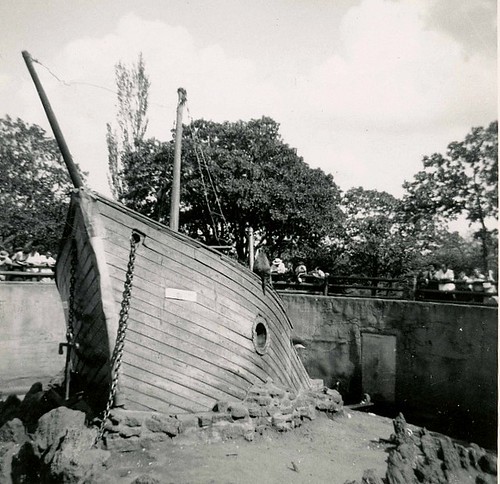
Ghost Exhibit's--Oklahoma City Zoo's "Monkey Island"


Oklahoma City Zoo has open a new building called the Zooseum, filled with history of the zoo. Included is this interactive diorama of the old "Monkey Island" exhibit at the zoo. What an incredible idea!!!


In 1935 "Monkey Island" was built by the WPA, and the sunken ship was 80 feet long and came with a 17 foot mast for the primates to climb on. The underground quarters even had a heating system, which was fairly revolutionary for its time. Initially the island featured 35 rhesus monkeys, and in 1936 5 ring-tailed lemurs were briefly added to the exhibit. The lemurs eventually were removed because they bullied the monkeys. In 1998 "Monkey Island" was demolished/dismantled by the zoo.

Bostock & Wombwell's

Bostock-Wombwell


Bostock

Bostock employee pass

Learn-America » "Finding Our Grandfather in the Attic


Bostock, Wombwell, Dreamland/Coney Island, Circus, 101 Ranch. A little bit of everything.

THE TRAINING OF WILD ANIMALS--Frank Charles Bostock 1903

Chapter pages


Origin and History of WildAnimal Training
23


hi Housekeeping for Wild Animals
34


The Feeding of Snakes and Elephants
61


Characteristics of Different Animals
76


Going Bad Animal Instinct
97


How Wild Animals are Captured
109

The Wild Animals Kindergarten
120


How Wild Animals are Taught Tricks
143


An Animal Show at Night
166


The Principles of Training
182


The Animal Trainer Some Famous Trainers
202


Guarding Against Accidents
226

An animal learns by association. Though it is a common belief, fear is not the reason for his obedience to the trainer’s commands. Habit and ignorance are what cause the animal to become an apt pupil in the hands of the trainer. The animal becomes accustomed to the same way of doing the same things at much the same time, and ignorance of his own power keeps him in this state of subjection.

This habit is developed in the animal by a laborious and patient process, and it requires an intimate knowledge of animal nature to perfect it. The easiest animal to train is one that is born in his native haunts and new to captivity. The reason is obvious. The one bred in captivity has nothing to fear from man, and knows his own strength and the fear he inspires. Accustomed from earliest infancy to the greatest care and coddling, he arrives one day at the stage of growth where he realizes the value of his own claws, for the use of them has shown him that human beings do not like to be scratched. Some attendant, who has, perhaps, been playing with him day by day, admiring his pretty, innocent-looking little face, soft furry body, and velvety paws while he is still a mere cub, drops him suddenly one day when he feels the deep prick of the claws hidden in those paws. The next time someone comes along, the cub may not be in the mood for handling; he remembers his past experience, that scratching means “let go,” and he puts this into practice. His liberty is promptly secured, and he lies in peace in his cage.

The next man who comes may get a deeper scratch, and he lets the cub alone even more severely, a fact that the cub notes and remembers the next time, for he is gradually acquiring a deeper disrespect for man and his puerile ways; he is beginning to know the value of the little knives he carries sheathed in those paws, and he is very soon autocratic in his independence. He accepts his food as tribute and his care as homage due, and regards man simply as another and much weaker animal.

Such an animal is difficult to train. The only method that may be pursued at all is severe letting alone for several years. All that time he holds himself more and more aloof. He is, in a way, congratulating himself on his success, and man in time becomes a shadowy being who periodically brings his food, and who, in some inexplicable way, keeps him in that oblong box for people to stare at.

He does not mind the people, nor does he mind the cage very much, for he has never known anything else; but deep in him—so deep that he barely realizes its existence— slumbers a desire for freedom and an unutterable longing for the blue sky and the free air. Man, in some way, is to blame for that intangible “something” that he wants, and scarcely knows that he wants; and man has shown him that he is afraid of his claws, and, therefore, the animal hates and despises man and all belonging to him.

The cub grows insolent in his haughtiness; then his undefined desire for freedom decreases somewhat, becomes more and more vague, and his existence is finally comprised in just two sensations: eating and sleeping. The disturbance of either is an insult, and any one who disturbs either an enemy. Man allows both to continue, and so the cub in his arrogance tolerates him.

The cub passes beyond his days of cubhood, and acquires almost the years and stature of a full-grown lion. He has few of the qualities of the newly captured animal. He does not fear man; he knows his own power. He regards man, as an inferior, with an attitude of disdain and silent hauteur….

With a lion which comes straight from Africa or Asia, the case is different. Lions are usually trained when between two and three years of age. A two-year-old of fine physique and restless nature has been brought straight from his native haunts. There he has been actually the monarch of the jungle. His life has been free and fearless.

Suddenly, in the midst of his regal existence, he falls into a hidden pit or is snared in the woods. His desperate struggles, his rage and gnashing of teeth, all the force of his tremendous strength, are ineffectual in breaking the bonds of his captivity.

After his first supreme efforts are over and he has thoroughly exhausted himself, he proves himself a very king of beasts in his haughty disdain. He apparently realizes his helplessness and submits to everything in sullen, dignified silence.

The lion comes to the trainer from the jungle, after having been subjected to abuse and gross indignities. From the time of his capture by natives who have neither feeling nor consideration for the poor animal, until he reaches his final quarters, his treatment, as a rule, is such as to terrify him and render him nervous in the extreme.

He has been kept in cramped quarters, cruelly joggled and crushed in a narrow box, while on his way to the coast from the interior, his bedding left unchanged, and the poor food with which he has been provided thrown carelessly into the refuse and offal which surround him. Clean and fastidious, as the lion always is about his food and person, he often refuses to eat, and this, added sometimes to seasickness, makes his suffering terrible.

The finest health and strength will not stand such a strain for long, and by the time the journey is ended the lion is disgusted with man and his ways. In many cases he arrives in Europe or America sick and weak, and appears only too ready to die and get rid of his troubles. The only passion he has in this State is a genuine hate for man, and this hate seems to be the only thing which arouses him at all.

It frequently happens that wild animals kill themselves in frenzies of fear during transportation. Everything in their surroundings is new and strange to them. They have lost their freedom and the fresh air; they are cramped and half stifled in close quarters, surrounded by dirt and unwholesomeness, and cannot even keep their bodies still for two seconds, owing to the perpetual motion which goes on, and which, perhaps, terrifies them more than anything else. Therefore, when a wild animal is first turned over to the trainer, he is practically mad with his experiences and terrors (pg. 120-126, pg 129-132).

'In the old days of “lion taming,” the trainers actually preferred to train young lions that were born in the wild, and full of negative experiences with people.

Part of the reason why a lion would be easier to train after having had so many reasons to fear and detest a person is that the primary methods for training a lion are using what we would call negative reinforcement and positive punishment.

For a young lion that had been trapped in this manner, the human appears to have almost mystical power over him. He has spent much of his life scaring other animals, but at the age of two, he most likely hasn’t been a major asset to his pride’s hunts. He has arrived as scared adolescent, and the only thing he knows about people is that they have absolute power to move him as they desire. Nothing in his life has told him that he has any power over people. And the fact that he may have arrived in ill health also likely makes him a bit timorous.

But the animal is eventually tamed in this manner:'


The feeding of the animal is the first step in his training. The trainer takes him about six pounds of fresh beef or mutton, with a piece of bone, once a day, and fresh, clear water three times a day. No one but the trainer is permitted to go near him or to look at him. He must become acquainted with the trainer’s personality, and must be made to realize that his food and drink come from the trainer only. He must also be made clearly to understand that the trainer means him no harm, but does everything for his comfort.

The meat is usually put upon the end of a long iron fork, and passed to him through the bars. He has to come a little way forward to take the meat, and gradually, without thinking about it, he comes close to the trainer. At first the water-pan is tied to the edge of the cage, because in trying to draw the pan toward him the animal would upset it and make the cage wet and uncomfortable. There would also be the difficulty of getting it out again with a stick, which might arouse the animal’s anger.

When the lion and his trainer have once become acquainted, he is transferred to another cage; and here again, for two weeks, he is fed, watered, and taken care of by the same trainer, until the animal not only gets accustomed to him, but looks forward to his presence, because it invariably means something pleasant to himself. In about six weeks’ time a loose collar is slipped around the lion’s neck when he is asleep. Attached to this collar is a chain, long enough for the animal to move about, but just short enough to keep him from reaching the end of the cage.

The next step is for the trainer to put a chair inside the cage. Instantly the lion springs for it, but, being kept in check by the chain, finds he cannot reach it, and retires to a corner, growling sulkily at the intruder. After casting vindictive glances at it, with occasional growls, he becomes accustomed to, its presence and takes no further notice of it. Then the trainer, after opening the door of the cage once or twice and looking in, finally walks calmly in himself and sits on the chair. He is just out of reach of the lion, and when the animal has growled and resented it as he did the chair, he again subsides into indifference.

Then comes the time when the lion is released from the chain, when the trainer takes his life in his hands, and when he knows that the moment of extreme danger has arrived. No matter how quiet and docile the lion may have appeared to be when chained, he is likely to develop suddenly a ferocious savagery when released.

At this stage Captain Bonavita always carries two stout oak sticks, one in the right hand and one in the left. The one in the right he keeps for immediate use, and when once punished with this stick, the lion, not knowing the purpose of the stick in the left hand, comes to fear that also and backs away from it. If possible, the sticks are used to stroke the lion, if he will permit it; for the condition of a wild animal is one of receptivity—he is willing to welcome anything that will give him pleasure. But it is rarely, indeed, at this stage of the proceedings that he will allow this.

In the first place, the lion is generally a little frightened or nervous himself, and alarm begets wrath. It is feline nature to dissemble that wrath until the moment of action. Leo does not growl or lash his tail. It is not the growling lion that is to be feared most, nor does the lashing tail, as so many suppose, indicate danger. Not anger, but good humor, comes from such indications. It is when the tail stands out straight and rigid that the trainer begins to think of retreat.

When the tail becomes stiff in this manner, it is generally a pretty sure indication that the animal is going to spring. When the trainer sees that tail become like an iron bar, he tries to slip out at the door; sometimes he knows he will never have the opportunity. Before the lion springs he glances aside carelessly, growling quietly, and the next instant, with open mouth and all four paws distended, he is sailing through the air, straight for the throat of the man, his tense body rigid with passion, and his five hundred pounds of sinew and muscle ready to descend on the intruder.

The man who will not have foreseen that terrific onslaught, holding himself in readiness for it, has no business with wild animals, and will, in all probability, never again attempt any dealings with them, because he will never have the chance. The agility which is one of the requisite qualities for a trainer must come into play, and upon it depends his life.

It is here that the chair, which plays no small part in an animal’s education, comes into use again. That chair was not brought into the cage merely for comfort. It is the best defense possible against the lion’s spring. Swift and apparently unpremeditated as the spring has been, the man has seen the tenseness of the muscles that preceded it, and before the animal has reached him, the stout legs of the chair are bristling between them.

Here is another problem for the lion. This unknown thing has suddenly assumed an unexpected and possibly a deadly significance. Snarling, he drops on his haunches and claws at the barrier; perhaps he has plumped into it and has felt the blows from its dull prongs. Then out from behind it springs a stick—the same stick of his pleasant memories, but turned to base uses now, for it flicks him smartly on the tip of his nose, just where a lion keeps all his most sensitive feelings.

Again it lands, and the chances are ten to one that two blows on that tender spot are enough. Howling with rage and discomfiture, the lion ceases to claw the chair and retires to his corner, very crestfallen and extremely puzzled and bewildered. By the time he has had leisure to consider the strange performance, the trainer is out of the cage, leaving the chair behind him.

Now the lion may do any one or all of several things, according to the depth of his emotions. He may glower and sulk in his corner; he may rant and tear about his cage, giving vent to his outraged feelings in loud roars; he may go for the chair and dismember it (not without scars to his own hide, probably); or he may settle down to think matters over calmly, possibly coming to the conclusion that it is unwise to attack any strange thing before finding out whether it can hurt in return.

Generally, after this chair incident, when the lion has got the worst of it, he calms down fairly soon, and on the reappearance of his trainer some time afterward has evidently forgotten the unpleasantness of it all, and remembers only that it is the trainer who brings him all he wants. In some cases he greets him with a gentle rubbing against the bars of his cage and a soft purr, for he is only a big cat, after all. The meat is taken with a slightly subdued air, he allows himself to be stroked and patted,—outside the bars,—and so another great step in his education has been taken and accomplished successfully.

The next stage in the training of a lion is for the trainer to enter the cage again with the chair and stick. No longer militant, but somewhat timid, the animal keeps in his corner, furtively watching the trainer. Little by little, the man edges the chair over until he is within reach; then he begins to rub the lion with his stick. Little by little he decreases the distance still more, until, finally, he has his hand on the lion’s shoulder and is patting him gently.

This is another great step in advance. The lion has learned to endure the touch of the human hand; although he murmurs sulkily, he likes it, for few animals are indifferent to petting. Day by day the trainer familiarizes the lion with his presence and touch; rubbing his back, stroking his shoulders, raising his paws,—a somewhat risky and ticklish trial,— and in the course of about two weeks after first entering the cage, if the animal be of fairly good temper, all alarm and overt enmity have been eradicated, so accustomed has the animal become to the presence of this one man (pg 133-144).


'How many wild animal trainer's can still find may useful "tips" in Frank Bostock's words of 1903? There is more to be learned from Bostock, put in the proper context about wild animal training, then any other book on the subject ever written. Back in the day, a lion was "tamed" through something like the Stockholm Syndrome. They were essentially brainwashed into doing the bidding of people.

Such an animal would have been easier to work with, given the methods they used, than one born in captivity that has learned to treat humans as a social partner.'

Capt. Jack Bonavita and Mae West


In May 1904, Dreamland opened in Coney Island. To the right of the Surf Avenue entrance stood a building that Mae West entered, holding the hand of her father "Battling Jack" West. Almost 11 years old, but looking younger because of her petite frame, little Mae was nearly as transformed by the experience as Alice was when plunging into Wonderland.
• • For years, Mae talked about, and thought about, the impression Bostock's lions left on her. The lead lion tamer was Captain Jack Bonavita. Born in Philadelphia in 1866, his muscular frame and courage - - not to mention his sleek military garb, knee-high boots, and sinister moustache - - made him popular with the ladies. Actress Marie Dressler, then working a concession at Coney Island, caught Bonavita's act as often as she could. And it was an unparalleled performance that the 38-year-old trainer gave with his 26 trained lions.


Mae's fixation on Jack Bonavita and Bostock's lions inspired her to do "I'm No Angel," in which she fulfilled a lifelong dream of being inside the cage with the king of beasts. Born under the sun sign Leo, Mae felt destined for this - - and she insisted on performing her own stunts. The film begins with Mae riding an elephant. How many other 41-year-old actresses are eager to take risks like that?
• • Dreamland burned to the ground on May 1911.
• • Frank Bostock died, after a bout with influenza, in October 1912.
• • From 1913 -1917 Jack Bonavita focused on filmmaking, working as a stunt man, a director, and an actor. His silent films always co-starred wild animals and some of the lion or jaguar tamers he had worked with at Bostock's Circus. A few flickers he starred in were: "Avenged by Lions" [1916] and "The Woman, the Lion, and the Man" [1915].
• • Mae's hero Jack Bonavita died in the month of March from a polar bear attack at age 51 on 19 March 1917 in Los Angeles, California.